
The Fall Guitar Reset: A 20-Minute Seasonal Tuneup


Winter might be the humidity danger-zone, but summer can be pretty darn hard on a guitar.
Hot cars. Humid rehearsal rooms. Outdoor gigs. Sweaty hands. Long practice sessions. Maybe a little less attention to maintenance than you’d like to admit, because you've been having too much fun (which is good).
Then fall rolls around. Temperatures drop, the air gets drier, the heat comes on, and suddenly that guitar that felt great a couple months ago doesn’t feel quite the same.

Time to stash your guitar away and hope it feels better in the spring? No way. Fall is one of the best times of year to give your guitar a reset.
You don’t necessarily need a full professional setup, either. In about 20–30 minutes, you can clean up some of the accumulated summer grime, put on a fresh set of strings, check a few important measurements, and make sure your guitar is ready for the colder, drier months ahead.
Here are seven things we recommend checking.
1. Change Those Summer Strings
Let’s start with the obvious one... and we're not just saying this because it's us!
If the strings currently on your guitar survived an entire summer of sweaty hands, humid weather, outdoor gigs, or countless hours of playing, they’ve earned their retirement.
There’s no universal rule for how frequently guitar strings need to be changed. Some players can kill a set in a couple gigs. Others can happily play the same strings for months. What matters is how they sound, feel, tune, and intonate.
Sometimes you don't need nuance to know, though. If your strings feel rough or grimy, have visible discoloration, struggle to stay in tune, sound noticeably dull, or simply don’t feel as lively as they used to, it’s probably time.
You're going to need to get those strings out of the way to do your fall maintenance anyway, so this is the perfect opportunity to start fresh.
Remove the old strings and give yourself an unobstructed guitar to work with. Don't install the new ones quite yet. We have a couple of other things to do first.
Stringjoy tip: If you’re not sure what to restring with... we've got options! Our electric, acoustic, bass, and other string sets are wound to our specs right here in Nashville. And if standard gauges aren't quite right for your guitar or playing style, you can build a custom set to get exactly the tension and feel you're looking for. Need help choosing? Get in touch!
2. Clean the Places You Usually Can't Reach
Ever notice how much gunk accumulates directly underneath your guitar strings? How does that even happen?
With your strings removed, you have easy access to the fretboard, frets, pickups, bridge, and all those annoying little spaces that are difficult to clean normally.
Take advantage of it. Start by removing loose dust with a clean microfiber cloth or soft brush. Pay particular attention to areas around the bridge, pickups, fretboard edges, and headstock.
Then give the body and other appropriate finished surfaces a proper cleaning.
Our Stringjoy All-in-One Cleaner was made specifically for this kind of routine maintenance. It helps remove fingerprints, sweat, oils, and everyday grime without turning a simple guitar cleanup into a chemistry experiment.
You may be surprised how much better a guitar feels when it isn't covered in three months of... you.
Tools of the Trade
Everything you need to refresh and fall in love with your guitar(s) all over again
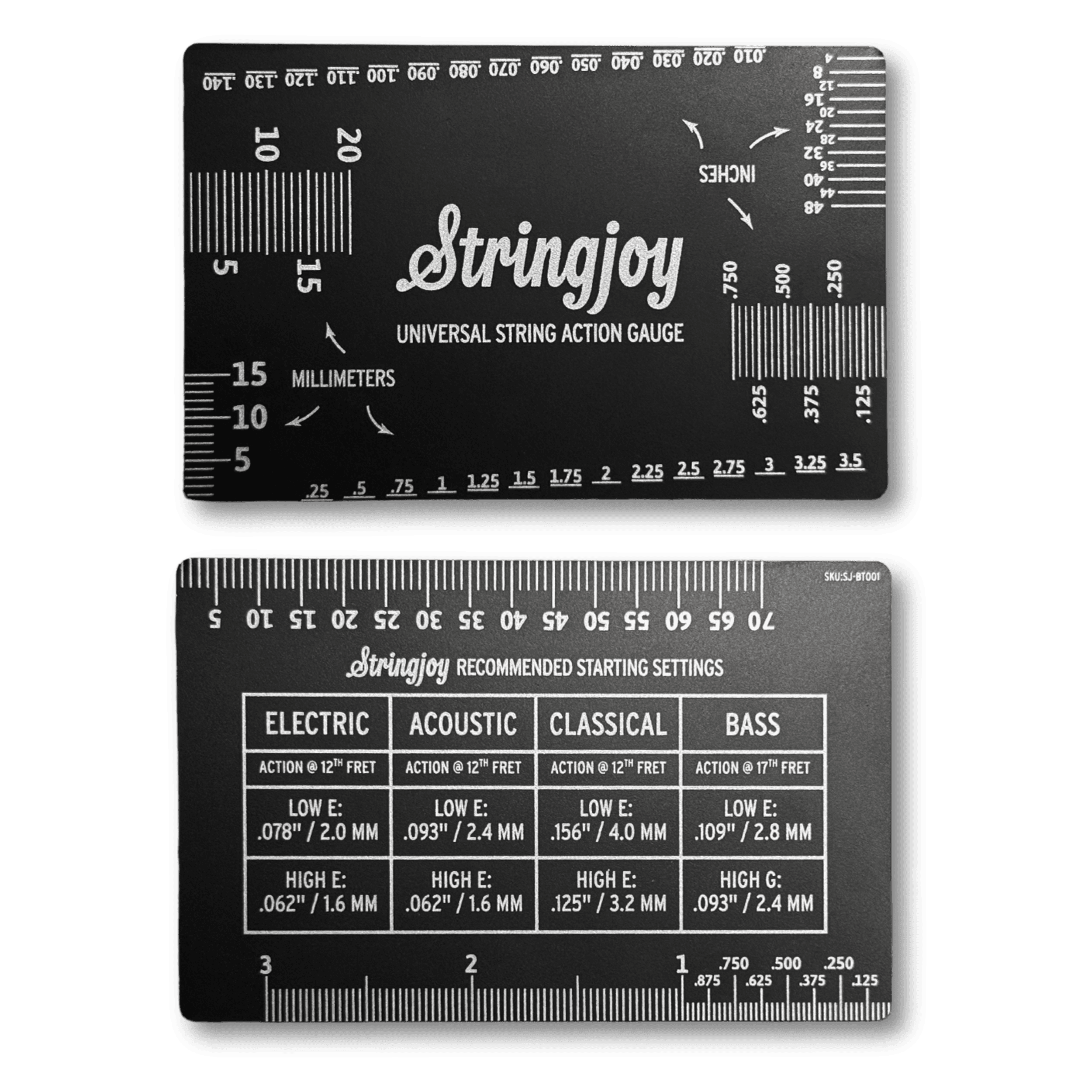
Stringjoy Universal String Action Gauge

Stringjoy Ultimate Guitar Care Kit

Stringjoy Refresh String & Fretboard Care Kit

Stringjoy Clean-Sweep Guitar Brush Bundle

Stringjoy Precision Workstation Bundle

Stringjoy Custom 6 String Naturals - Phosphor Bronze Acoustic Guitar Strings

Stringjoy Microfiber String Cleaning Cloth

Stringjoy 10-48 Balanced Light Gauge Orbiters - Coated Nickel Electric Guitar Strings

Stringjoy 9.5-44 Soft Touch Signatures - Nickel Wound Electric Guitar Strings
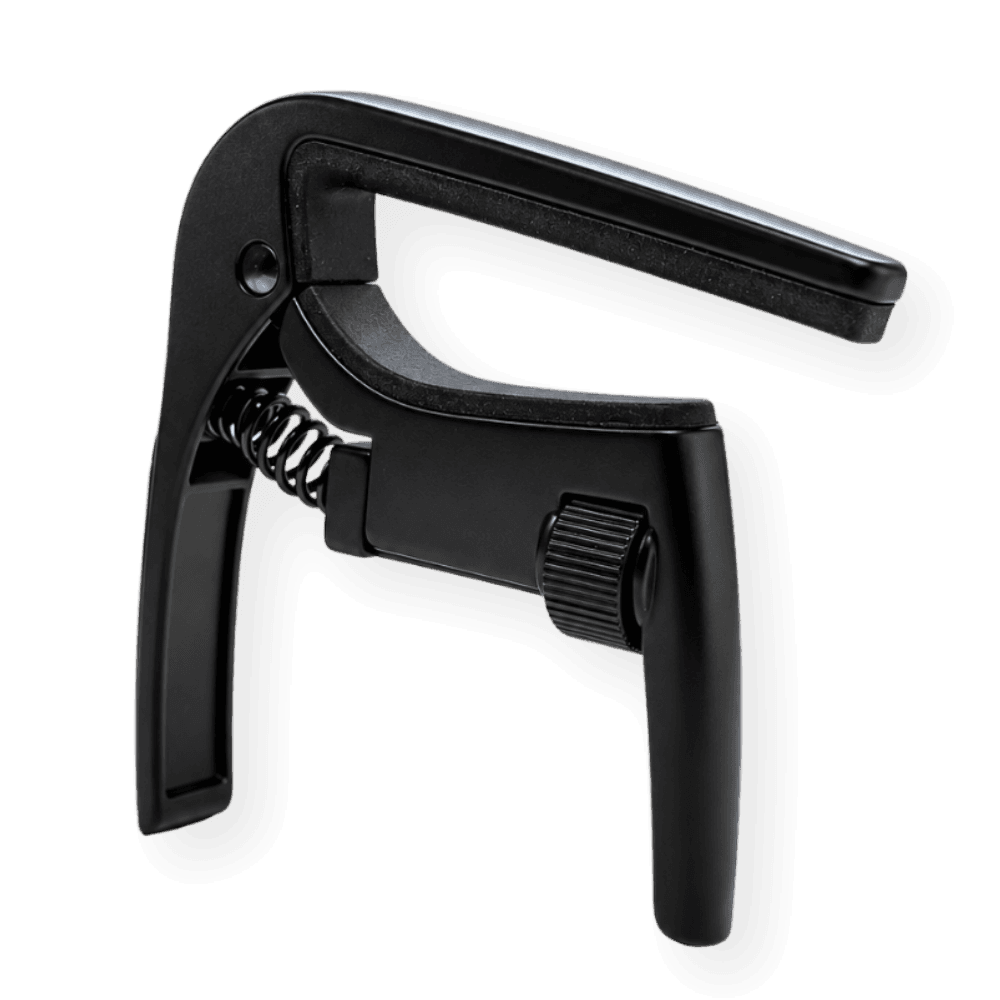
Stringjoy Sweetspot Buzz-Free Adjustable Tension Capo - Black
3. Give Your Fretboard Some Attention
With your strings off, take a good look at the fretboard.
If you have an unfinished rosewood, ebony, or similar fretboard, does it look unusually dry? Dirty? Dull?
Fall is a particularly good time to pay attention to this because the transition into heating season often means substantially drier indoor air.
First, clean away any accumulated dirt around the frets. A soft brush is particularly handy here.
If the fretboard looks thirsty, apply a small amount of Stringjoy Fretboard Conditioner according to the directions, let it penetrate, and wipe away the excess. The goal isn't to soak the wood. More is definitely not better. You're simply helping replenish an unfinished fretboard that has become dry.
And remember: finished maple fretboards generally shouldn't be treated the same way as unfinished rosewood or ebony. No oils are necessary, and a damp, soft cloth should do the trick.
Once everything is clean, you've got the perfect blank canvas for the next part of the reset.

4. Restring. Then Check Your Neck Relief
Now it's time for fresh strings.Install your new set, tune everything to pitch, strum some open chords and, give the guitar a couple of minutes to settle.
Then check your neck relief.
Relief 101: Your guitar neck isn't supposed to be perfectly straight. A small amount of forward bow, known in guitar parlance as "relief," gives vibrating strings room to move without rattling against the frets.
The transition between seasons can sometimes affect that relief. Wood reacts to its environment, and changes in temperature and humidity can alter how a guitar plays. Fortunately, you can perform a basic check without any fancy equipment.
Put a capo at the first fret, then fret the low E string near where the neck meets the body. The string itself now creates a straight reference line across the fretboard.
Look at the small gap between the bottom of the string and the tops of the frets around the middle of the neck. No gap at all, or a very large gap, can indicate that the neck relief deserves some attention.
And yes, there's a convenient Stringjoy connection here too: our Sweetspot Adjustable Tension Capo gives you the speed and convenience of a trigger capo with adjustable tension more like a screw-style capo. That makes it useful both onstage and at the workbench.
5. Measure Your Action
How high are your strings? Not how high do they "feel." How high are they actually?
Small changes in neck relief can make a guitar feel dramatically different, and humans aren't particularly good at judging tiny measurements by eye. So, measure it!
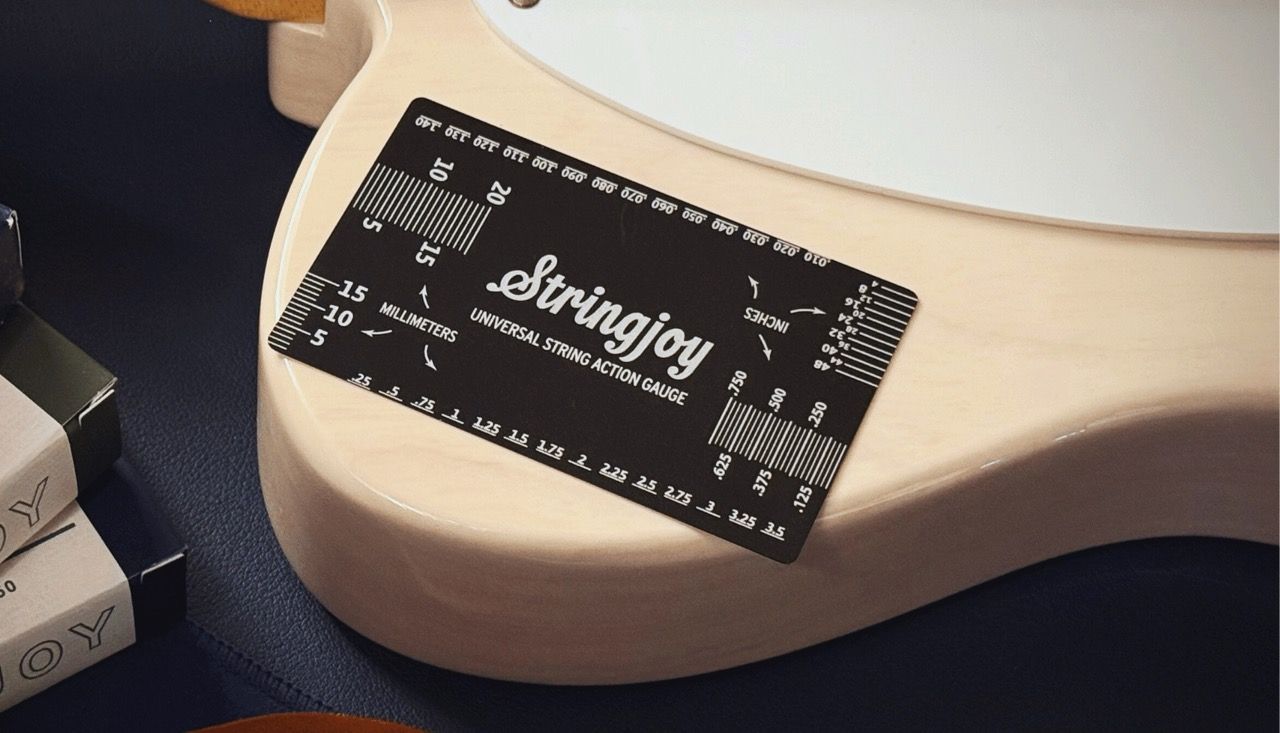
Our Stringjoy Universal String Action Gauge lets you measure string height precisely at different points along the fretboard. It also includes recommended action ranges right on the gauge, giving you a useful reference point while you're working.
Take measurements on both the bass and treble sides and write them down.
This is useful even if you don't intend to adjust anything yourself. Establishing a baseline means that the next time your guitar suddenly feels different, you can measure it again and determine whether something actually moved.
That's a lot more useful than staring suspiciously at your guitar and thinking, “...Was that always like that?”
6. Check Your Intonation
Once your new strings are installed, stretched, and holding tune reliably, check your intonation.
Start with the guitar accurately tuned. Compare the pitch of an open string with the pitch at the 12th fret. If the fretted note is noticeably sharp or flat relative to where it should be, your intonation may need adjustment.
Why check this after installing new strings?
Because old, dirty, damaged, or unevenly worn strings can intonate poorly themselves. Trying to perfectly intonate a guitar with strings that belong in the trash can send you chasing problems that aren't actually problems with the guitar. Fresh strings give you a much better starting point.
This is also one reason we put so much attention into how Stringjoy strings are made. Consistency matters. Not just for tone and feel, but for getting your instrument to behave predictably from one set to the next.
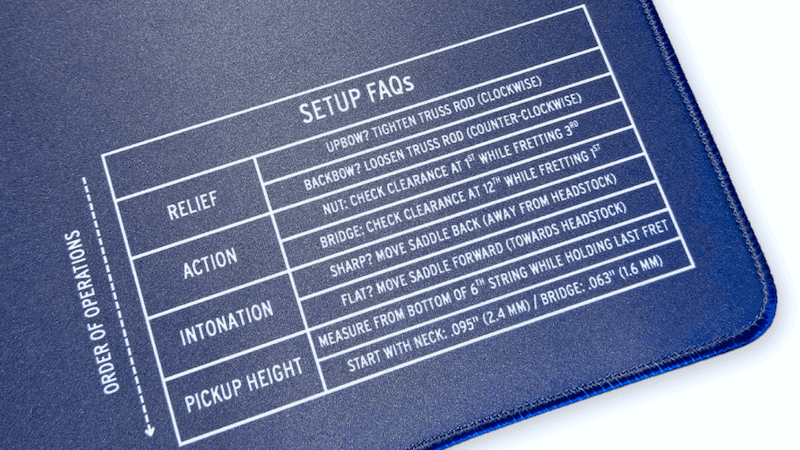
Stringjoy Tip: The basics of guitar setups are fairly simple to perform, but can be tricky to remember. That's why our Extra Large Precision Work Mat features a setup order of operations printed right on it for easy reference.
7. Prepare for Drier Air
Finally, give a little consideration to where and how your guitar is going to spend the next several months.
In many parts of the world, turning on the heat means indoor relative humidity starts dropping substantially. That matters, especially for acoustic guitars.
Very dry conditions can contribute to fret sprout, changes in action and neck relief, shrinking wood, and, in severe cases, cracks or other structural problems.
A simple digital hygrometer can tell you far more than guessing based on how the room feels. Acoustic guitar owners should pay particularly close attention to the manufacturer's recommended humidity range and consider an appropriate guitar humidifier when conditions call for it.
Also, duh: avoid storing guitars directly beside radiators, heating vents, fireplaces, or other sources of concentrated heat.
Your 20-Minute Fall Guitar Reset
There's not much to it.
Remove the old strings. Clean the guitar. Clean and condition the fretboard if appropriate. Install fresh strings. Check the neck relief. Measure the action. Check the intonation. Start to keep an eye on humidity.
None of these jobs is particularly complicated, but together they can make a remarkable difference in how a guitar looks, feels, and plays.
Better yet, doing this a couple times a year helps you get to know your instruments. You'll start recognizing what's normal for each guitar—and you'll be much more likely to notice when something changes.
So before winter arrives, give your guitar a little attention.
After everything it put up with this summer, it probably deserves it.
Other Posts you may like


Guitar Strings Order: How the Guitar is Tuned and Why

Two Handed Tapping: Our Top 8 Tappers of All Time

Which Guitar Strings Wear Your Fret Wire Down More?
What is Nashville Tuning? Its History, Best Guitar Strings & Uses

Guitar Scale Length Explained: String Tension & Playability

What Guitar Strings I Used To Play...
0 Responses
Leave a Reply
Your email address will not be published. Required fields are marked *


