Guitar Picks: A Brief History and Handy Field Guide


From humble beginnings, the guitar pick has evolved into an essential - and personal - tool for players everywhere, coming in a dizzying array of materials, thicknesses, textures, and shapes.
If you thought picks were just tiny pieces of plastic, think again—these little guys can make or break your tone, technique, and overall playing experience.
Before we dive into the wonderful world of modern guitar picks, let’s stroll through history.
The use of plectrums dates back centuries—perhaps even millennia. The ancient Greeks plucked their lyres with plectra made of bone, wood, or metal. During the Renaissance, musicians used quills (sorry, Big Bird) to strum their stringed instruments. By the early 20th century, guitar picks as we know them started taking shape, with celluloid becoming the go-to material for many years.

Celluloid Picks – Classic for a Reason
Celluloid picks are the granddaddies of the modern plectrum world. Invented in the early 20th century, celluloid was the first synthetic plastic used in pick production. These picks are known for their smooth texture, bright attack, and nostalgic appeal. They often mimic tortoiseshell (which was once the real deal but, thankfully, has been banned for decades). If you’re after that warm, vintage tone, a good celluloid pick is a great place to start.
- Warm vintage tone
- Balanced flexibility
- Smooth string release
Notable players: Elvis Presley, The Beatles, and just about every guitarist who played before 1960.
Nylon Picks – The Flexible Favorite
Nylon picks have been a staple since the 1950s. They offer a slightly textured grip, making them less slippery, and they tend to be more flexible than other materials. This flexibility makes them ideal for strummers, as they glide over the strings without too much resistance. They also produce a softer attack, which can be a blessing for acoustic players who don’t want a harsh, percussive sound.
Herco picks, which emerged in the '40s, eventually became legendary in the rock world. These picks were especially popular among guitarists who needed a grippy surface for sweaty hands (looking at you, stadium rockers). They often feature a blend of nylon and textured surfaces, providing both flexibility and control. Herco picks were a favorite of Jimmy Page, which automatically makes them cool.
- Softer attack
- Textured grip for sweaty hands
- Excellent for strumming
Notable players: Jimmy Page, David Gilmour, and countless acoustic guitarists who appreciate a smooth, warm tone.

Tri-Tip Picks – When Two Sides Simply Aren’t Enough
Tri-tip picks, sometimes called “three-sided picks,” are designed to give a player multiple playing edges in one pick. Whether you want a sharp attack, a rounded tone, or just don’t want to keep reaching for a new pick after hours of playing, these picks have you covered. Some designs offer smooth bevels or even different thicknesses on different edges, making them a versatile choice for players who like to experiment.
- Versatile attack
- Multiple tone options
- Added utility
Notable players: Bluegrass players, mandolin players, and bassists!

Acrylic Picks – The Modern Tone Shaper
Acrylic is the hot new thing in the world of boutique picks. Acrylic picks feature polished surfaces which allow for a smooth attack, while their rigid structure provides excellent articulation and volume. Unlike some softer materials, acrylic picks don’t wear down as quickly, making them a favorite among shredders and technical players.
- Strong articulation
- Increased volume
- Smooth, polished attack
- High durability
Notable players: Carlos Santana, jazz-fusion guitarists, and those who enjoy the finer things in pick technology.

Jazz Picks – Small but Mighty
Jazz picks, most notably the famous Jazz III, are compact, thick picks designed for precision and speed. Their small size allows for greater control, making them a go-to for players who favor intricate picking techniques (P.S. some folks make 'em Jumbo Sized, too!). While they’re called “jazz picks,” they’re used in almost every genre, from blues to metal to prog rock.
- Greater picking control
- Faster lead playing
- Crisp articulation
Notable players: Eric Johnson, Kirk Hammett, and anyone who loves a fast, articulate attack.
Pick & Choose
Some of our best-selling and staff favorite picks

Stringjoy .88mm Key Lime Jumbo Jazz Picks - 10 pack

Stringjoy 1.5mm Longsword Acrylic Picks - 2 pack

Stringjoy .73mm Lemon Classic Picks - 10 pack
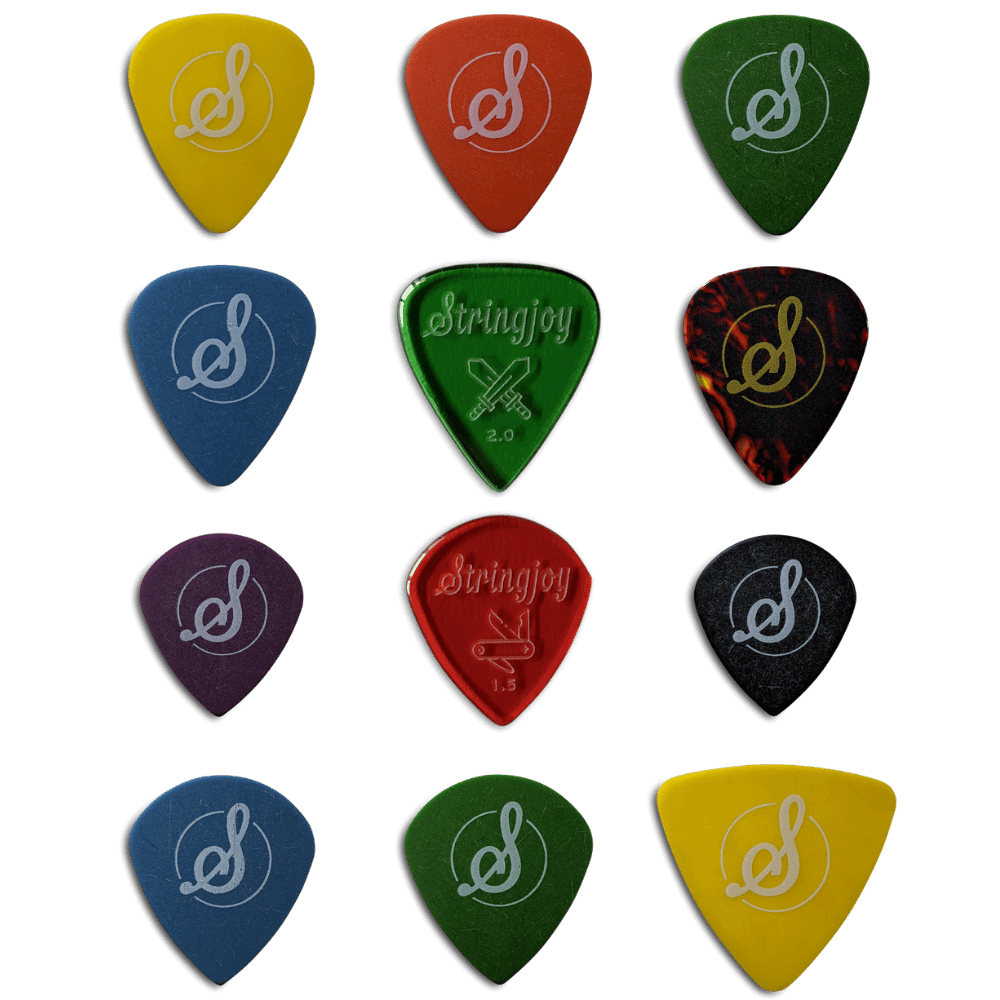
Stringjoy Best-Selling Pick Sampler - 12 Pack

Stringjoy 1.14mm Grape Tri-Tip Picks - 10 pack

Stringjoy Thin .50mm Tortoise Celluloid Picks - 10 Pack

Stringjoy 2.0mm Dagger Acrylic Picks - 2 Pack

Stringjoy 1.0mm Blueberry Classic Picks - 10 pack
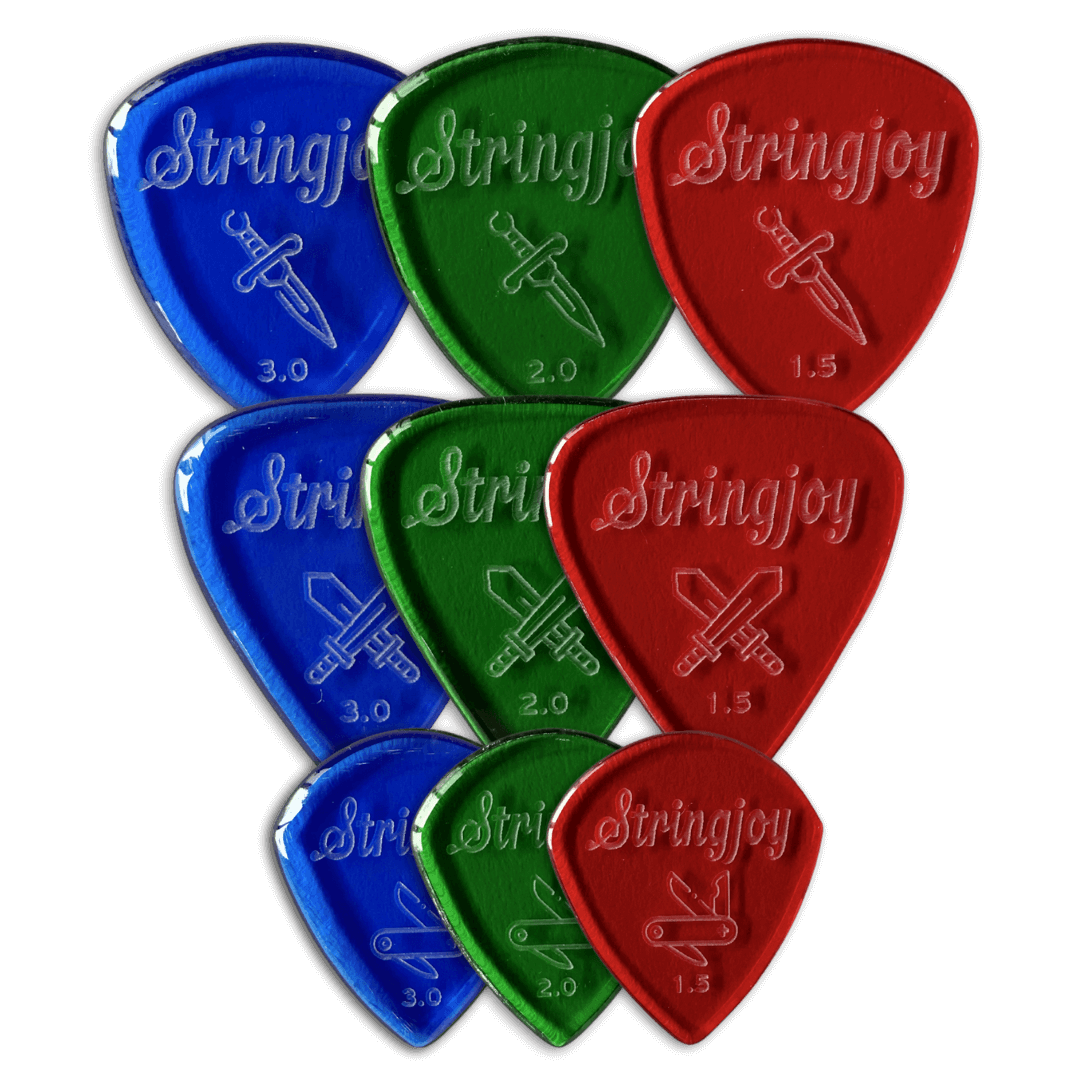
Stringjoy Acrylic Sampler - 9 Pack
Guitar Pick Thickness Guide: Thin vs Thick
One of the biggest factors affecting tone is guitar pick thickness.
Thin Picks (.50mm–.73mm)
- More flexibility
- Softer attack
- Ideal for strumming
Medium Picks (.73mm–.88mm)
- Balanced flexibility and control
- Great all-around option
Thick Picks (.88mm–1.5mm+)
- Stronger attack
- More volume
- Greater precision
- Preferred for lead playing
Does guitar pick thickness affect tone?
Absolutely. Thicker picks produce a fuller, more articulate tone, while thinner picks create a brighter, more percussive sound.
Legendary Guitarists and Their Picks of Choice
What better way to wrap this up than by taking a look at some legendary players and the picks that helped shape their sound?
- Jimi Hendrix – Medium celluloids offered Jimi flexibility for both searing lead lines and dynamic rhythm parts.
- Eddie Van Halen – Known for using thin nylon picks early on, but later preferred .60mm Max Grip.
- James Hetfield – A die-hard fan of thick (.88mm) ‘Tortex’ picks that offer a rigid attack for his machine-gun rhythm playing.
- Eric Johnson – A devotee of the Jazz III pick for its precision and clarity.
- Billy Gibbons – Famously uses a Mexican peso instead of a pick because, well, he’s Billy Gibbons.
Choosing the Right Pick for You
At the end of the day, the best pick is the one that feels right in your hand and suits your playing style. Whether you’re a die-hard fan of nylon, swear by celluloid, or want to experiment with boutique materials like acrylic, there’s a pick out there for you. The choice may seem overwhelming, but, the good news? They’re relatively cheap, so you can hoard them guilt-free—just don’t be surprised when they disappear into the black hole of lost picks (probably somewhere between your couch cushions and the void under your bed).
So go forth, grab a handful of picks, and see what works best for you. It might even be an awesome idea to grab one of our Sampler Packs, where just about all of the above-mentioned pick types are covered (save for nylon and peso). However you go about it, we highly recommend taking the time to discover where you are on the plectrum spectrum…. your tone, technique, and your fingertips will thank you!
Other Posts you may like


Guitar Strings Order: How the Guitar is Tuned and Why

Two Handed Tapping: Our Top 8 Tappers of All Time

Which Guitar Strings Wear Your Fret Wire Down More?
What is Nashville Tuning? Its History, Best Guitar Strings & Uses
Guitar Scale Length Explained: String Tension & Playability
What Guitar Strings I Used To Play...
0 Responses
Leave a Reply
Your email address will not be published. Required fields are marked *

