
What Is a Capo? The Complete Guitarist’s Guide


The humble guitar capo is one of those accessories that looks almost suspiciously simple.
Clamp it onto the neck. Play guitar. That’s it, right?
Well, sort of.
A good capo can make difficult songs easier, put a song into the perfect key for your voice, unlock chord voicings that would otherwise require an alarming number of fingers, and give familiar progressions an entirely different sound. It’s a little device that can dramatically expand what you can do with six strings—without requiring you to learn six thousand new chord shapes.
But what is a capo, exactly? How does it work? Why are there so many different kinds? And what separates the best capo from the one currently rattling around in the bottom of your gig bag?
Let’s get into it.
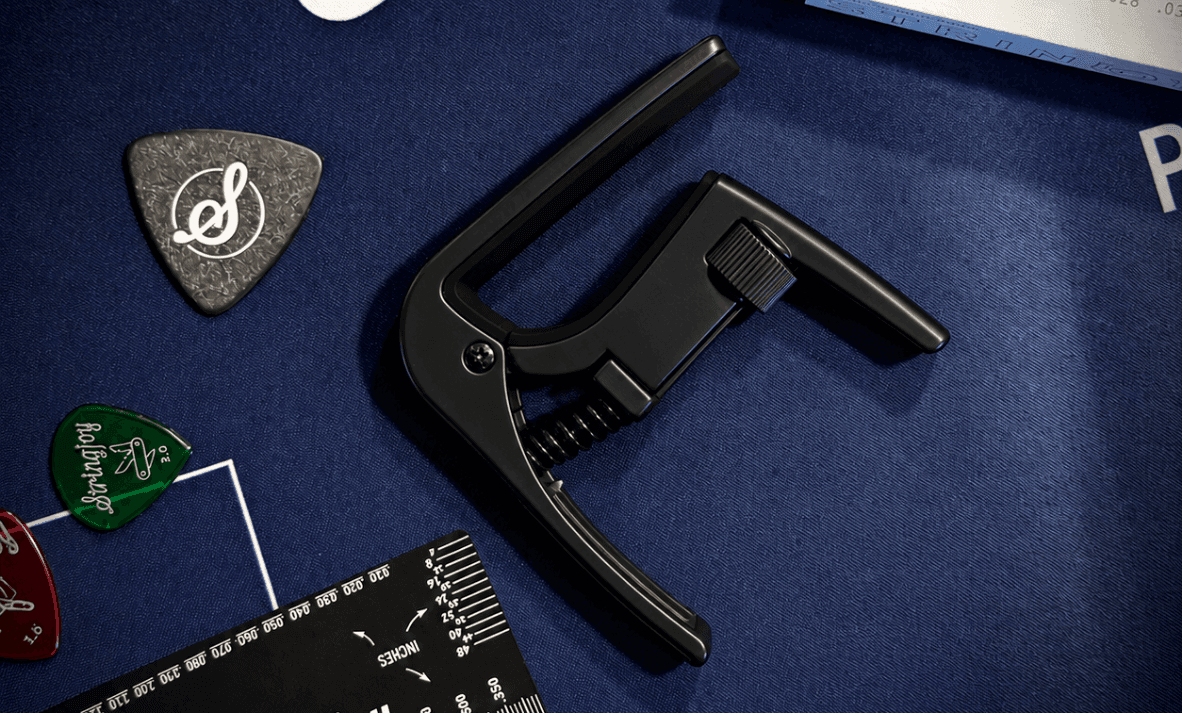
What Is a Capo?
A guitar capo is a device that clamps across the strings of a fretted instrument, effectively shifting the nut higher up the neck.
Normally, the nut at the top of your fretboard determines the starting point—or “zero fret”—of your open strings. Put a capo behind the second fret, and the capo now holds every string down there. As far as your strings are concerned, the second fret has become the new nut.
That means every open string is now two semitones higher in pitch.
Here’s the useful part: your familiar chord shapes still work exactly the same way.
Put a capo at the second fret and play an open G chord shape. Your fingers are still making a G shape, but the chord you actually hear is an A. Play a D shape and you’ll hear an E. Play a C shape and you’ll hear a D.
An example in practice:
| Capo Position | Chord Shape You Play | Chord You Hear |
|---|---|---|
| No Capo | G | G |
| 1st Fret | G | G♯ / A♭ |
| 2nd Fret | G | A |
| 3rd Fret | G | A♯ / B♭ |
| 4th Fret | G | B |
| 5th Fret | G | C |
In other words, the capo transposes the guitar for you while allowing your hands to keep doing what they already know.
That is a ridiculously useful trick.
Where Did Capos Come From?
The idea behind the capo is centuries old. Players of fretted instruments have long looked for ways to temporarily shorten the vibrating length of their strings, allowing them to change keys while retaining familiar fingerings.
Early capo-like devices were considerably more primitive than what we use today. Historical versions used strings, straps, wedges, screws, and various clamp mechanisms to hold the strings against a fret. The word itself comes from the Italian capotasto, essentially meaning “head of the fretboard.”
Over time, the basic mission stayed the same while the hardware improved: hold all the strings cleanly at a chosen fret, stay out of the player’s way, and ideally avoid making the guitar sound like it was tuned by a committee.
Today, capos come in several forms, but they’re all descendants of that same simple idea.

How to Use a Capo
If you’re learning how to use a capo, the easiest way to understand it is to think of the capo as a movable nut.
Let’s say you know four chords: G, C, D, and Em. Congratulations—you can already play approximately 87% of all human musical output.
Now, imagine you’re accompanying a singer and those chords put the song too low for their voice. The song needs to move up two semitones.
Without a capo, you could transpose every chord. Your G becomes A, C becomes D, D becomes E, and Em becomes F#m. Perfectly possible, but suddenly that friendly open Em has turned into an F# minor barre chord.
Or you can put a capo on the second fret and keep playing G, C, D, and Em shapes.
Your hands get the easy shapes. The singer gets the higher key. Everybody wins.
That’s one of the most important things to understand about capos: they don’t merely make chords easier. They let you separate the chord shapes you play from the key the audience hears. And that opens up some genuinely creative possibilities.
Take a Hard Song and Make it Better
Say a song is in B major. Without a capo, you might play:
B – E – F♯ – G♯m
That's a lot of barre-chord territory for a beginner. Even experienced players may prefer the sound of ringing open strings.
Put a capo on the 4th fret, and you can instead play:
G – C – D – Em shapes
The audience still hears:
B – E – F♯ – G♯m
Same song. Same key. Much friendlier chord shapes.
Or, suppose another guitarist is already playing a progression in A using standard A, D, and E chords. You could play exactly the same notes—but the two guitars may step all over each other sonically.
Instead, put your capo at the second fret and play G, C, and D shapes.
Now both guitars are playing the same chord progression in the same key, but using different voicings in different parts of the fretboard. The open strings ring differently. The notes inside each chord are arranged differently. Suddenly the two guitar parts sound bigger and more layered rather than like two people fighting over the same chair.
Capos are fantastic songwriting and arranging tools for exactly this reason.
Why Use a Capo?
Transposition is the obvious answer, but it’s only the beginning.
A capo can help match a song to a singer’s vocal range without forcing the guitarist into awkward chord shapes. It can make barre-chord-heavy songs playable with ringing open chords. It can give a progression a brighter, chimier character by moving familiar shapes higher up the neck.
It’s also an easy way to explore new sounds when writing.
Take a progression you’ve played a thousand times, put the capo at the fourth or fifth fret, and play it again. Technically, you’ve transposed the music—but because the guitar’s open strings, register, and resonance have changed, it can feel like an entirely different idea.
Sometimes songwriting inspiration is profound. Sometimes it’s as simple as putting a clamp on your guitar.
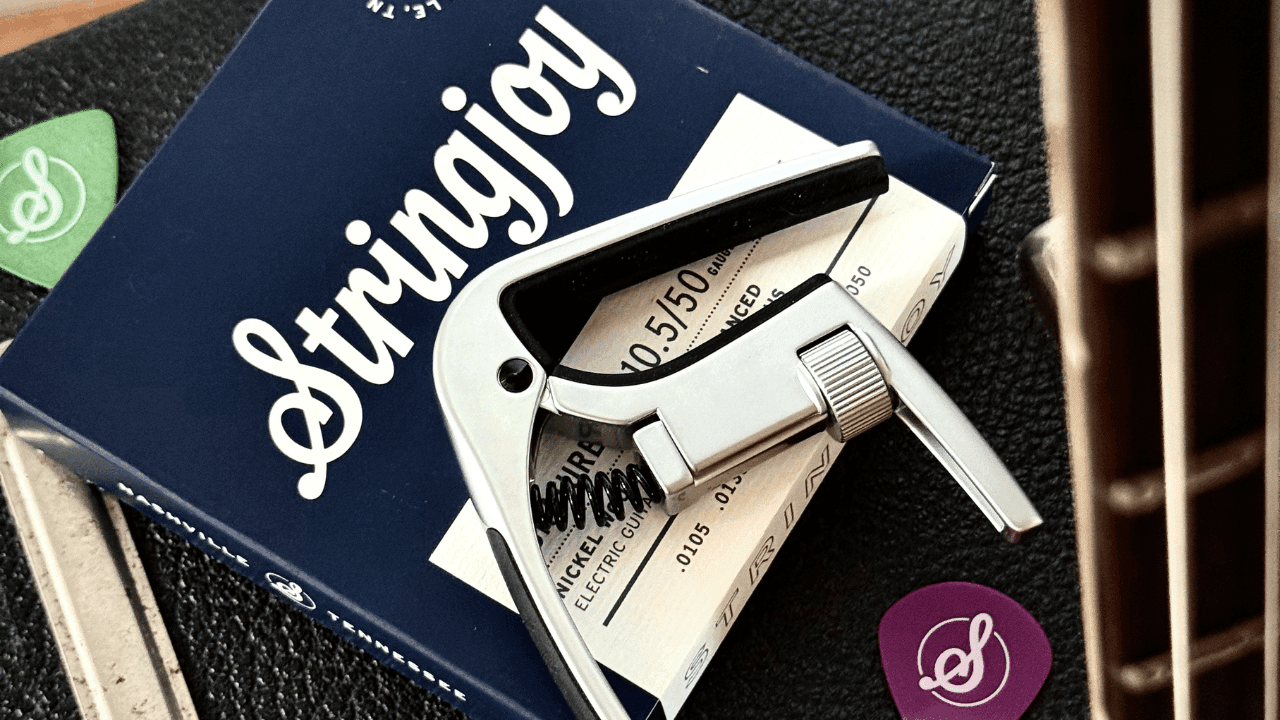
What Makes a Good Guitar Capo?
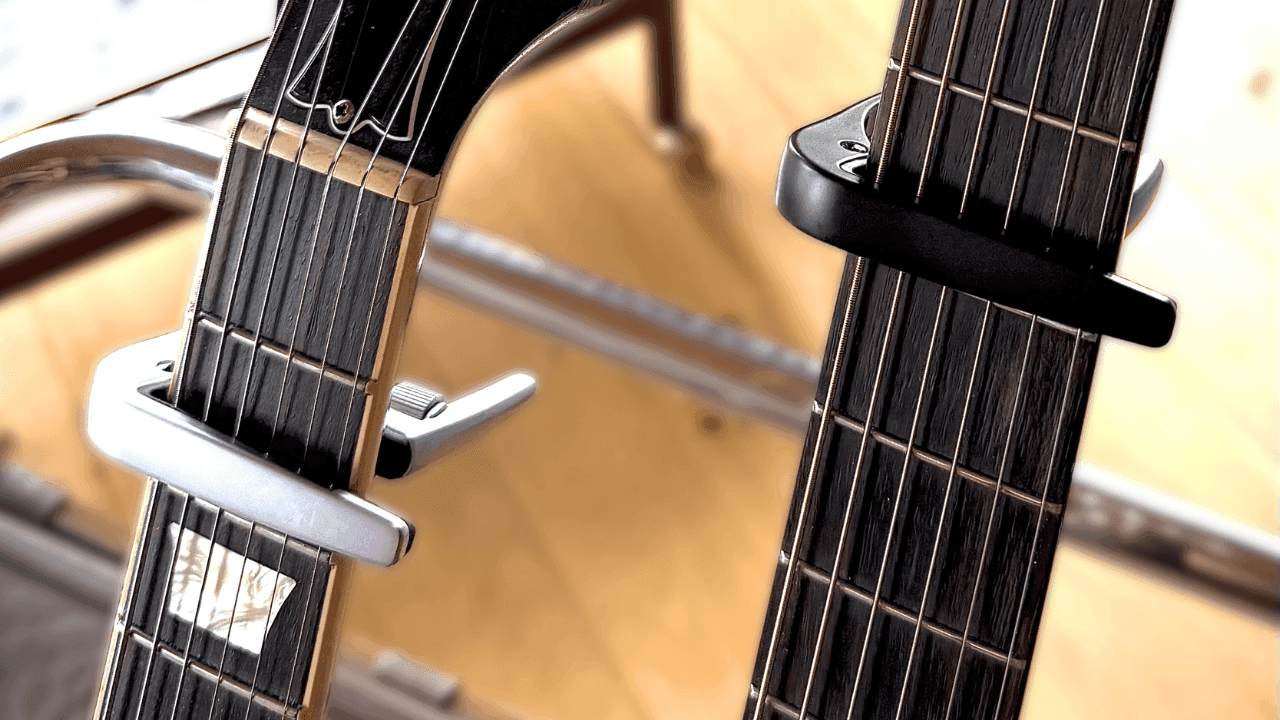
Every capo has one fundamental job: press the strings firmly enough against the fret that they ring clearly.
The tricky part is doing that without pressing harder than necessary.
Too little pressure and strings can buzz or fail to ring cleanly. Too much pressure can pull notes sharp, making a perfectly tuned guitar sound mysteriously less perfect the moment the capo goes on.
That makes tension adjustability one of the most useful features to look for when shopping for the best capo.
An adjustable tension capo lets you use only as much clamping force as your particular guitar requires. That matters because neck profiles, fret heights, string gauges, action, and fretboard radii vary from instrument to instrument.
You want enough pressure for clean notes. You don’t need the capo attempting to squeeze information out of your fretboard.
Placement matters, too. A capo generally works best positioned just behind the fret, not directly on top of it and not halfway back toward the previous fret. Good placement requires less pressure and helps minimize tuning problems.
Then there’s the convenience factor.
You may need to move your capo several times during a set, rehearsal, or writing session, so one-handed quick change is genuinely useful. Being able to clamp, remove, or reposition a capo without putting down your pick, interrupting your playing, or performing a minor mechanical engineering procedure makes it much easier to actually use the thing.
The ideal combination, then, is straightforward: quick operation with controllable tension. Trust on this... we've looked into it!
Capos & Company
Our amazing Sweetspot® Capos and some other recent favorites to pair with them.
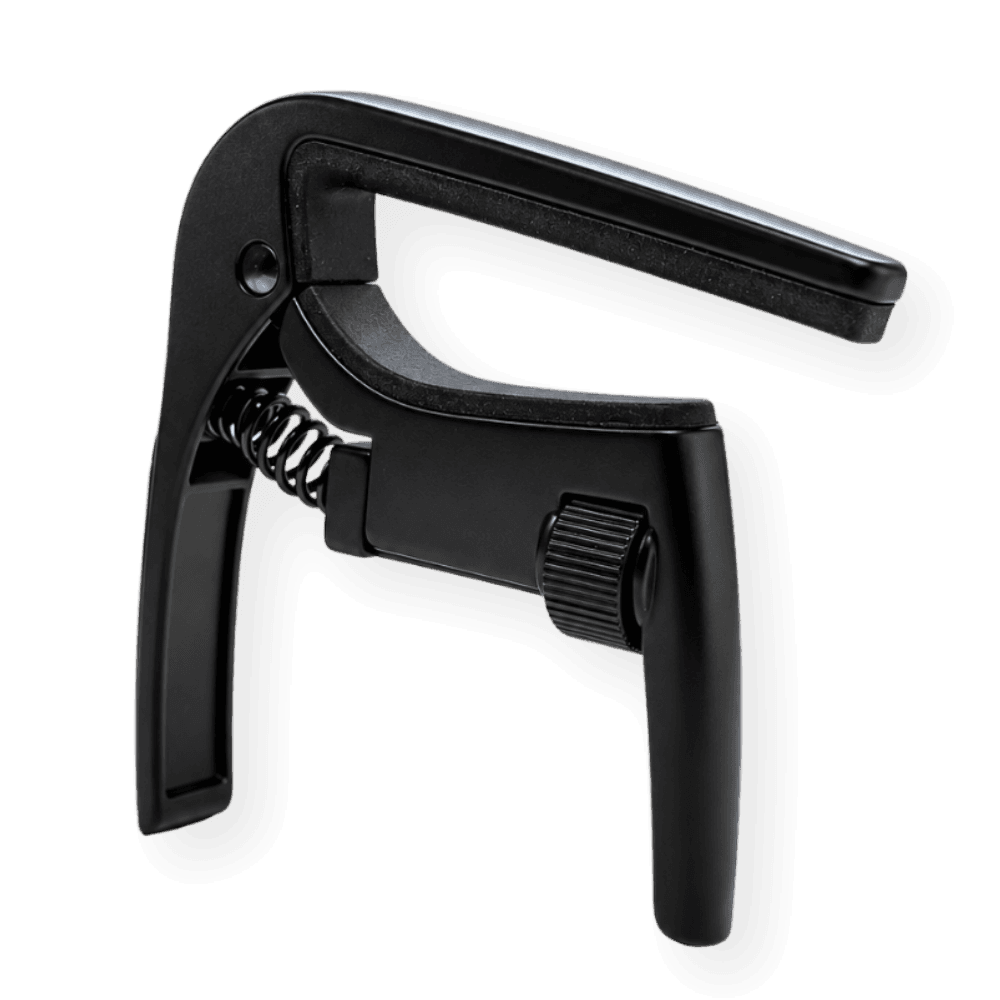
Stringjoy Sweetspot Buzz-Free Adjustable Tension Capo - Black
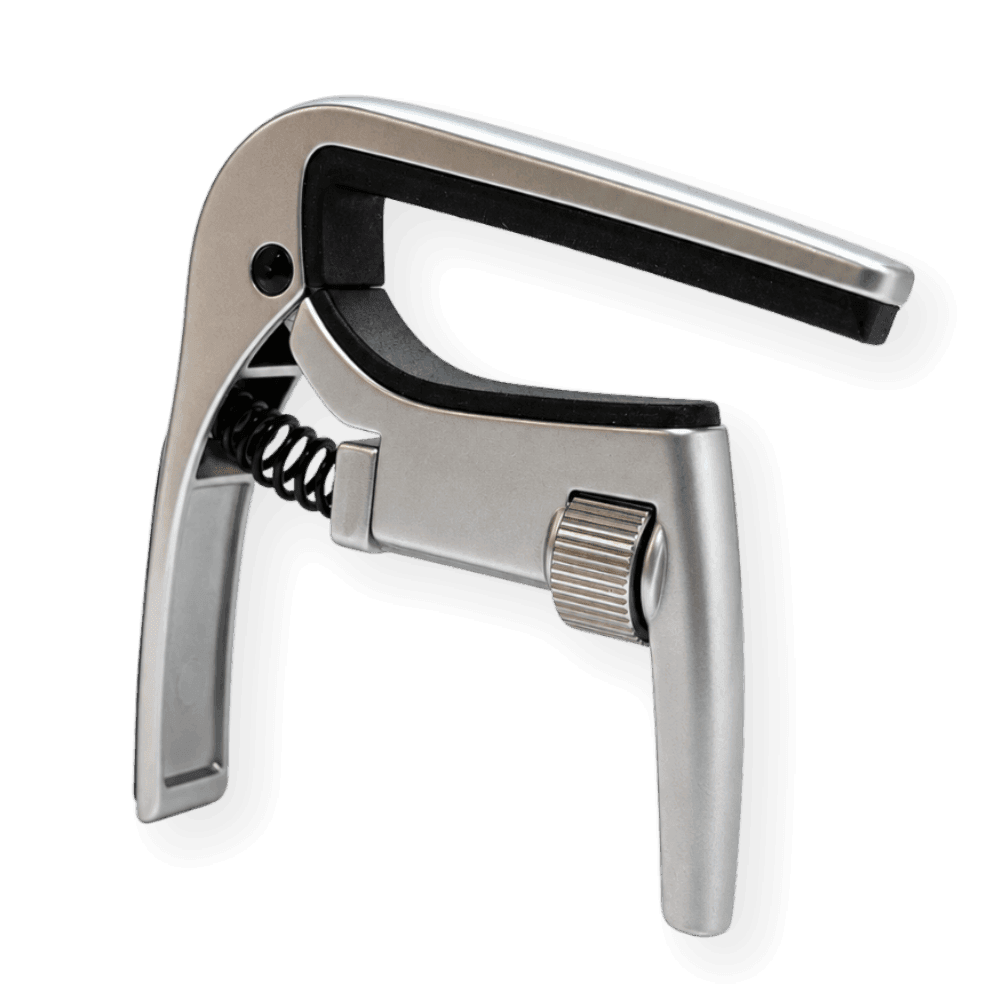
Stringjoy Sweetspot Buzz-Free Adjustable Tension Capo - Silver

Stringjoy 11-52 Super Light Gauge Naturals - Phosphor Bronze Acoustic Guitar Strings

Stringjoy 12-54 Light Gauge Foxwoods - Coated Phosphor Bronze Acoustic Guitar Strings

Stringjoy 2.0mm Dagger Acrylic Picks - 2 Pack

Stringjoy Ultimate Guitar Care Kit
Stringjoy Precision Workstation Bundle
The Most Common Types of Guitar Capos
Walk into a guitar shop and you’ll encounter a few basic capo designs.
Spring or trigger capos are probably the most recognizable. Squeeze the handles, place the capo, release. They’re fast, easy to operate with one hand, and convenient onstage. Their limitation is that many use a fixed spring force, so you have little or no control over how much pressure is applied to the strings.
Screw-style capos take the opposite approach. They allow the player to dial in clamping pressure more precisely, which can be excellent for tuning stability. The tradeoff is speed: depending on the design, installing and adjusting one can require two hands and a little more fiddling.
Yoke-style capos wrap around the neck and typically use a screw mechanism for controlled, even pressure. They’re popular with players who prioritize tuning stability and a low-profile feel, though they aren’t generally the fastest design to move.
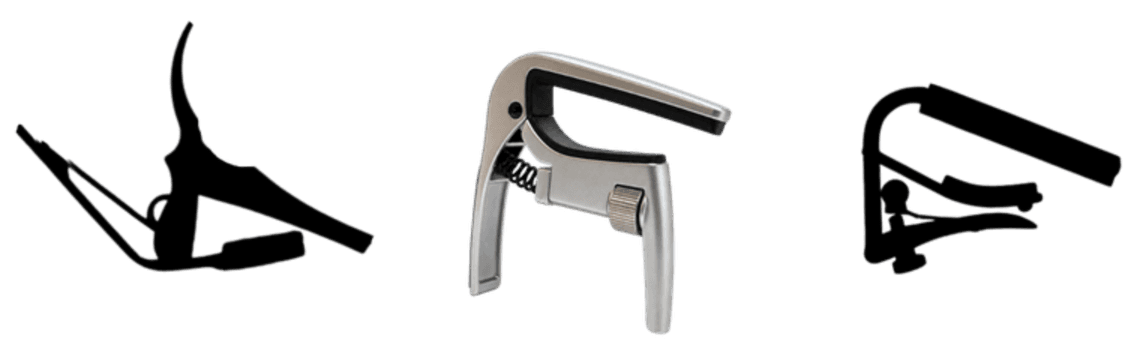
Strap-style capos use an adjustable strap or elastic material to create pressure. They can be lightweight and inexpensive, though they tend to offer less consistency and convenience than more rigid modern designs.
There are also partial capos, which intentionally fret only some strings. Those are less about straightforward transposition and more about creating alternate-tuning-like effects and unusual open-string harmonies. They’re incredibly fun, but they’re a different animal from the everyday six-string capo most players need.
For a general-purpose capo, the sweet spot (😉) is a design that combines the best qualities of the major styles: the speed of a trigger capo with the pressure control associated with an adjustable design.
Finding the Best Capo for Your Guitar
So, what should you actually look for?
First, make sure the capo fits your instrument and fretboard properly. It should apply even pressure across all six strings without requiring excessive force.
Second, prioritize adjustable tension. Different guitars need different amounts of pressure, and even the same guitar may behave differently depending on where the capo is positioned.
Third, consider how quickly you can operate it. If you perform live—or simply hate interrupting a good writing session—a capo that can be installed and repositioned with one hand is considerably more useful than one that requires a pit stop.
Lastly, listen.
Put the capo on. Check your tuning. Play every string individually. Play some open chords. Move it to a few different frets and repeat.
A good capo should make itself musically useful and otherwise stay out of the conversation.
Every Guitarist Should Own a Good Capo
A capo isn’t a cheat code for players who don’t know enough chords. It’s a legitimate musical tool used to transpose songs, accommodate singers, create new chord voicings, build layered arrangements, and coax completely different sounds from familiar shapes.
Whether you’re playing your first four-chord song, writing an acoustic arrangement, layering guitars in the studio, or trying to move a song up three semitones without subjecting yourself to a festival of barre chords, a good capo earns its tiny patch of real estate in your case.
Look for one that holds every string cleanly, lets you control tension, moves quickly with one hand, and doesn’t send your carefully tuned guitar sharp. Then clamp it on and see where those same old chords take you.
And if you need a recommendation on the best capo for you? Well, right this way!
Other Posts you may like


Guitar Strings Order: How the Guitar is Tuned and Why

Two Handed Tapping: Our Top 8 Tappers of All Time

Which Guitar Strings Wear Your Fret Wire Down More?
What is Nashville Tuning? Its History, Best Guitar Strings & Uses
Guitar Scale Length Explained: String Tension & Playability

What Guitar Strings I Used To Play...
0 Responses
Leave a Reply
Your email address will not be published. Required fields are marked *


