
Echo Chamber: The History of Analog Delay

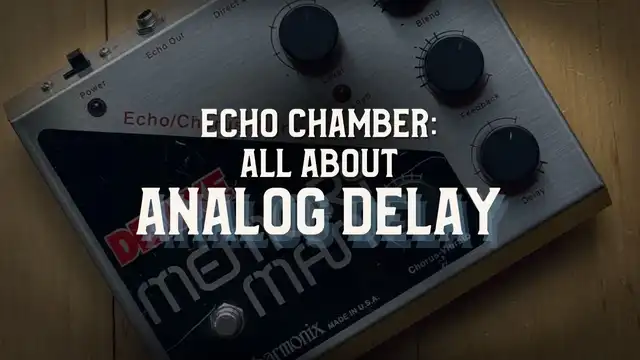
Delay is one of those effects that can fundamentally change the experience of playing guitar.
Add one repeat and a dry phrase suddenly has dimension. Add several and notes begin cascading into one another. Push the feedback far enough and the pedal stops behaving like an accessory and becomes an instrument of its own.
Long before pristine digital delays offered endless repeats and perfect synchronization, tape machines and bucket-brigade circuits made guitarists fall in love with echo’s imperfections.
So how did we get from cumbersome tape machines to a little box you can throw on a pedalboard? Let's go back to the start, when creating an echo required considerably more than turning a knob.
The Tale of the Tape
Delay’s origin story begins before anyone could stomp on it.
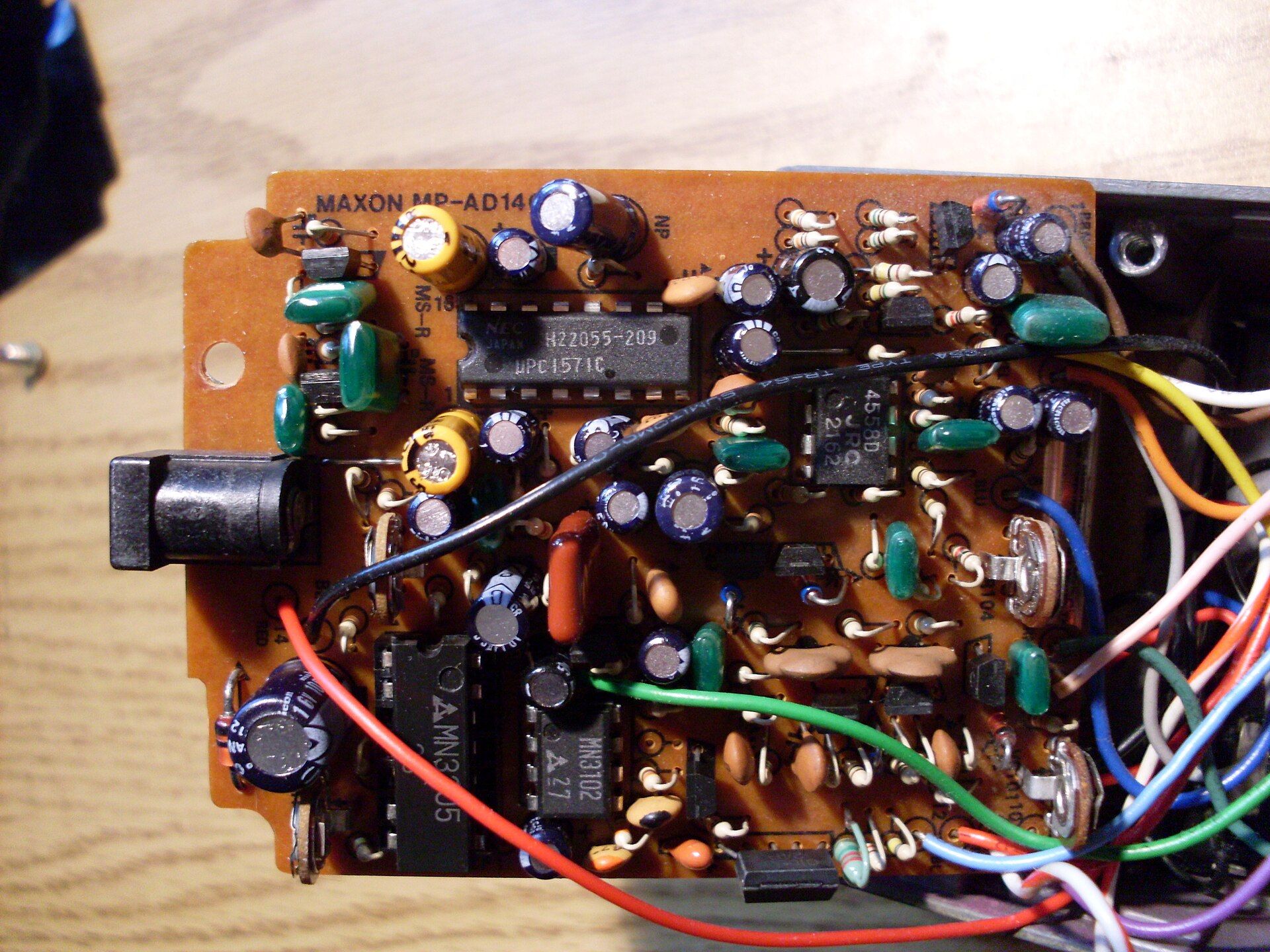
Early engineers created echoes by recording audio onto magnetic tape and reproducing it moments later. The distance between the record and playback heads, and the speed of the tape, determined the delay time.
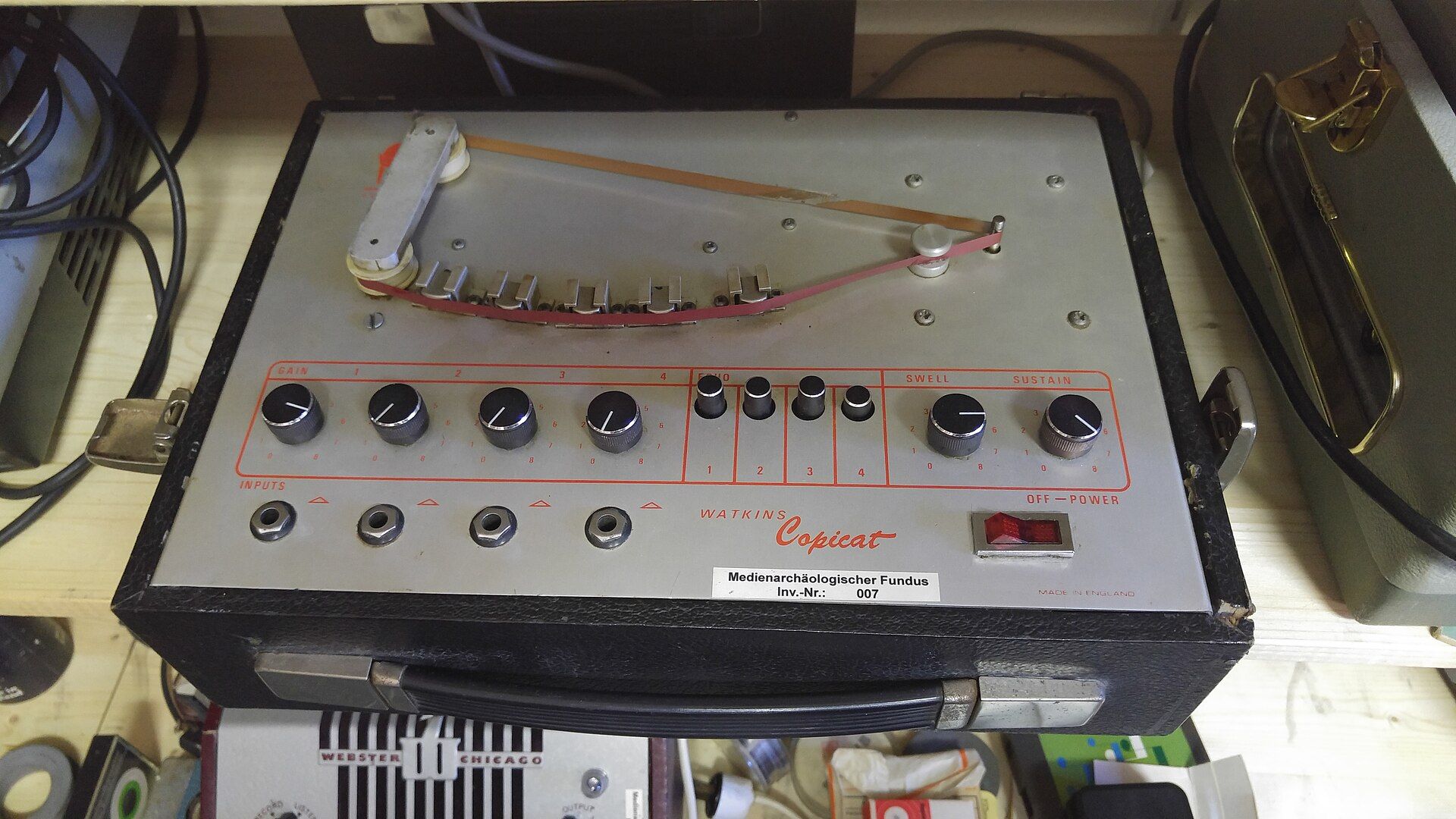
Machines including the Echoplex, Watkins Copicat and, later, Roland Space Echo turned the technique into practical musical equipment. The production Echoplex appeared in the early 1960s and notably allowed musicians to adjust delay by moving its playback head.
The basic delay controls familiar to modern players emerged naturally from these machines.
Delay time determined when the echo returned. Mix determined how much echo was heard alongside the original sound. Feedback routed some delayed audio back through the system, producing additional repeats. Push feedback sufficiently hard and the repeats regenerate into self-oscillation.
And what's the actual effect? Imagine shouting across a canyon.
Delay time is how long you wait before hearing yourself.
Mix is how loudly you hear the echo compared with your original voice.
Feedback is the canyon somehow catching that echo and shouting it back again. Turn feedback up far enough and the canyon keeps yelling even after you stop.
Tape sounded wonderful, but motors, heads and loops of magnetic tape weren't ideal ingredients for gigging.
Guitarists needed another way to delay.
It Bears Repeating
Some of our best-sellers of late

Stringjoy 10-48 Balanced Light Gauge Orbiters - Coated Nickel Electric Guitar Strings

Stringjoy 10-46 Classic Light Gauge Broadways - Pure Nickel Electric Guitar Strings

Stringjoy 9-46 Heavy Bottom Super Light Gauge Broadways - Pure Nickel Electric Guitar Strings

Stringjoy 12-54 Light Gauge Naturals - Phosphor Bronze Acoustic Guitar Strings
Stringjoy 9.5-44 Soft Touch Signatures - Nickel Wound Electric Guitar Strings

Stringjoy 9.5-48 Husky Super Light Plus Gauge Signatures - Nickel Wound Electric Guitar Strings
Stringjoy Custom 6 String Foxwoods - Coated Phosphor Bronze Acoustic Guitar Strings

Stringjoy 9.5-46 Balanced Super Light Plus Gauge Orbiters - Coated Nickel Electric Guitar Strings
Bucket Brigade Breakthrough
The technological breakthrough that paved the way for pint-sized delay units arrived at Philips Research Laboratories.
F.L.J. Sangster and K. Teer published their work on bucket-brigade electronics in 1969. Their system stored analog information in tiny capacitors and moved it sequentially through a circuit under control of a clock.
The name is wonderfully literal. Picture firefighters standing in a line, passing buckets of water from person to person. A bucket brigade device, or BBD, does something conceptually similar with an electrical representation of your guitar signal. Each stage hands its stored charge to the next until the signal reaches the other end slightly later than it entered.
That's the "explain like I'm five" explanation of an analog delay circuit: your guitar sound gets put into thousands of tiny imaginary buckets. The pedal passes the buckets down a line. Making the handoff slower increases the delay time.
There is a catch, and that catch is largely why musicians still love this decades-old technology.
Every trip down a bucket brigade device costs the signal a little fidelity. High frequencies disappear, noise increases, and filtering is required around the BBD circuit. Longer delays generally demand compromises in bandwidth. Instead of pristine copies, you get increasingly soft, dark warm delay repeats.
Engineers had turned a limitation into one of the signature sounds of guitar effects pedals.
By the mid-to-late 1970s, manufacturers were packaging this technology into practical effects. Electro-Harmonix introduced the Memory Man family in 1976; BOSS followed with compact designs including the DM-2 in 1981.
The analog delay pedal had arrived. Here are five units that have stood the test of time just as much as they've stretched it.
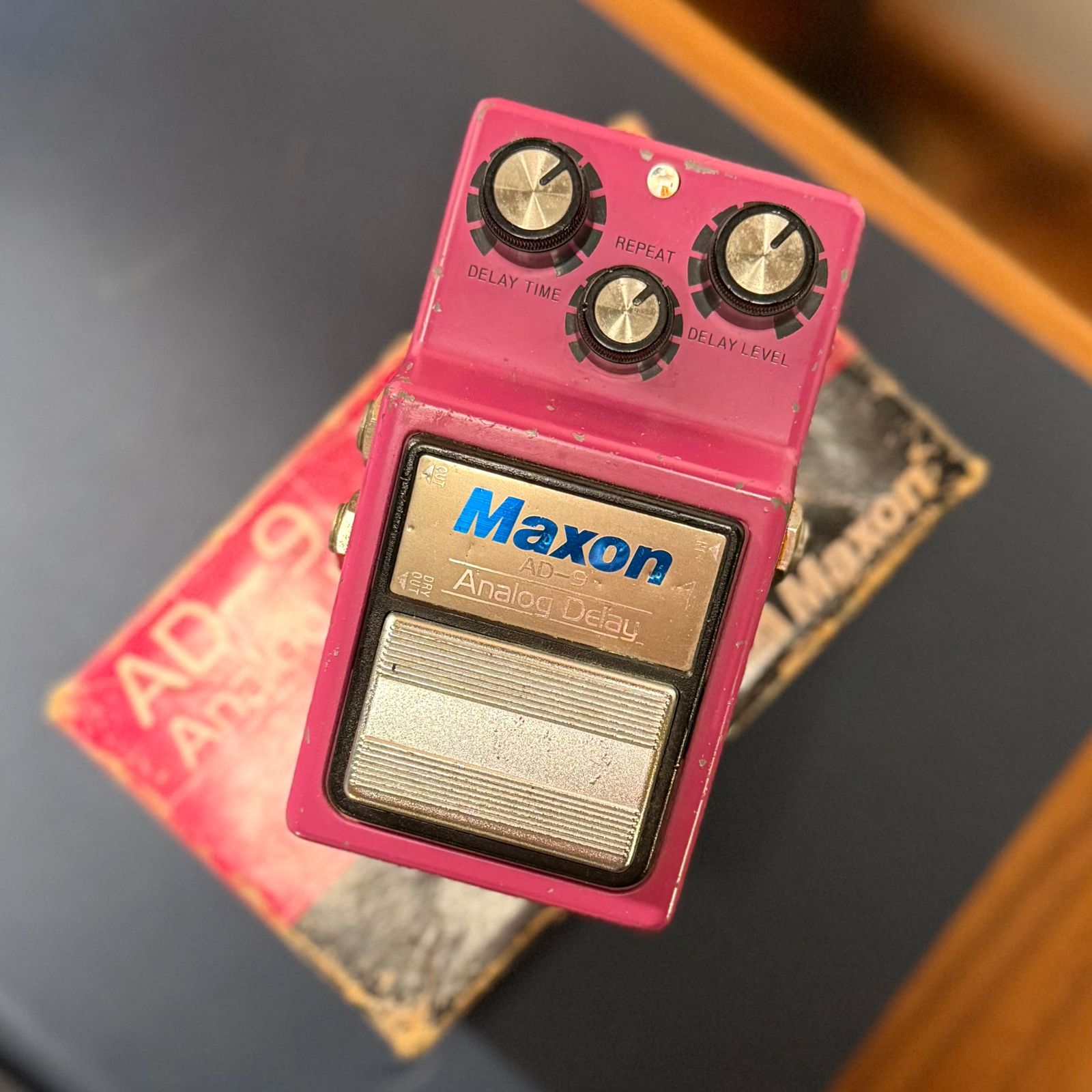
5. Maxon AD-9 Analog Delay
The Maxon AD-9 holds an important place in analog-delay history, even if many guitarists first encountered its famous circuit under the Ibanez name.
Maxon manufactured the original Ibanez AD9 in the early 1980s as part of the celebrated Nine Series. Built around bucket brigade device technology, it offered roughly 10–300ms of delay time, making it ideal for slapback, doubling, and warm ambient echoes. Push the Repeat control far enough and the AD-9 also erupts into wonderfully unruly self-oscillation.
Maxon would go on to revisit their design in the form of the AD9 Pro, AD10, AD900, AD999, and AD999 Pro, but in the lineage of Japanese guitar effects pedals, the original AD-9 belongs alongside the BOSS DM-2 as one of the quintessential compact BBD delays of the early 1980s.
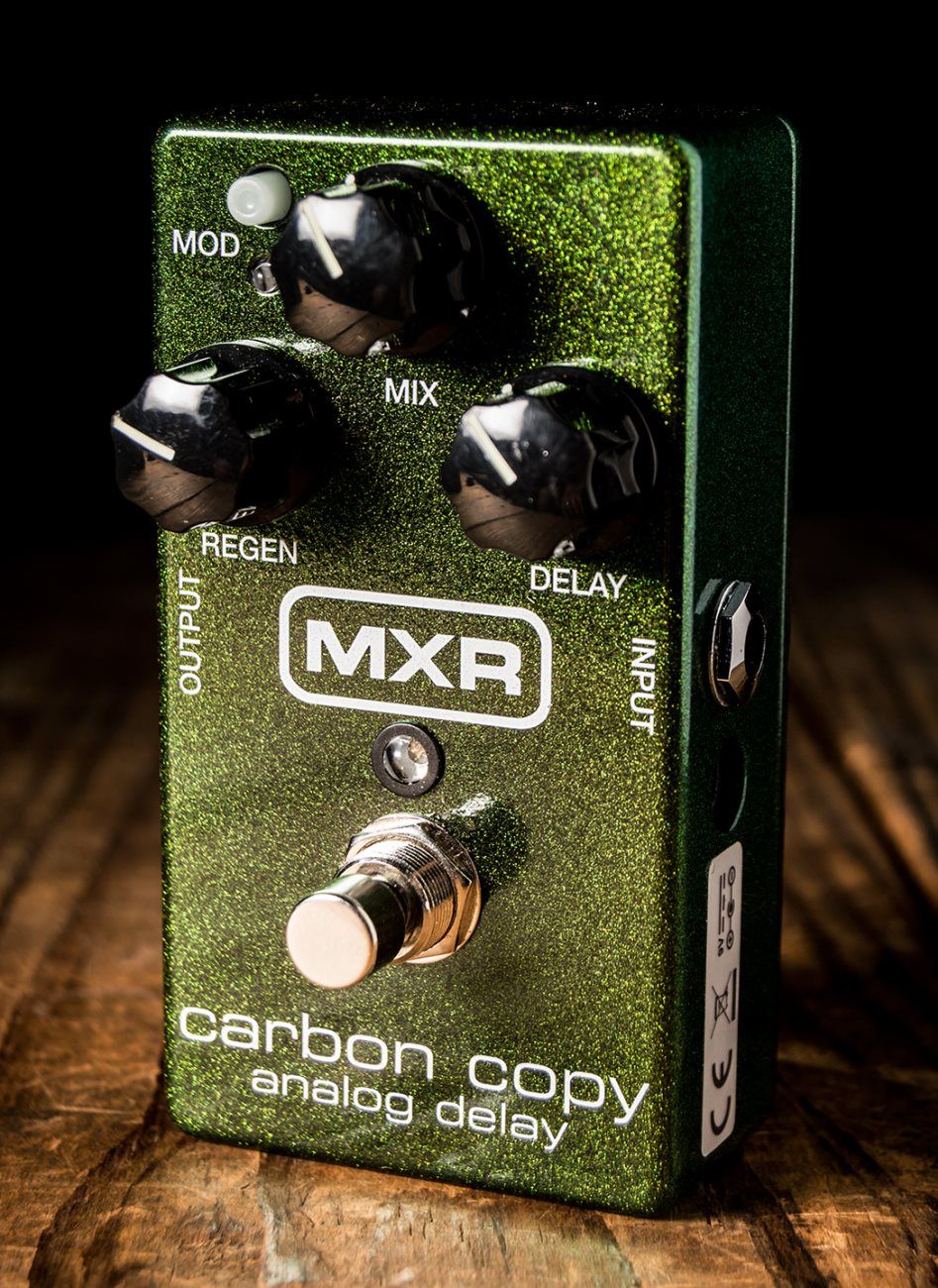
4. MXR Carbon Copy
Introduced in 2008, the MXR Carbon Copy helped put straightforward analog delay back onto a huge number of pedalboards. By its tenth anniversary, MXR could reasonably describe it as a modern rock-and-roll staple.
The formula is almost aggressively sensible: 600ms of delay time, Mix and Regen controls, plus switchable modulation. Internal trim pots adjust modulation width and rate. Underneath it all is a completely analog audio path using BBD technology.
The Carbon Copy takes your notes, sends them down the bucket brigade device, darkens each trip slightly, then optionally wiggles the pitch of the repeats. The result is the archetype of warm delay repeats—thick enough to be obvious but soft enough to sit behind your playing.
Its documented users span an unusually broad range, including Joe Perry, The Edge, Al Di Meola, Matt Pike and Tosin Abasi Few modern guitar effects pedals have done more to keep analog delay in everyday circulation.
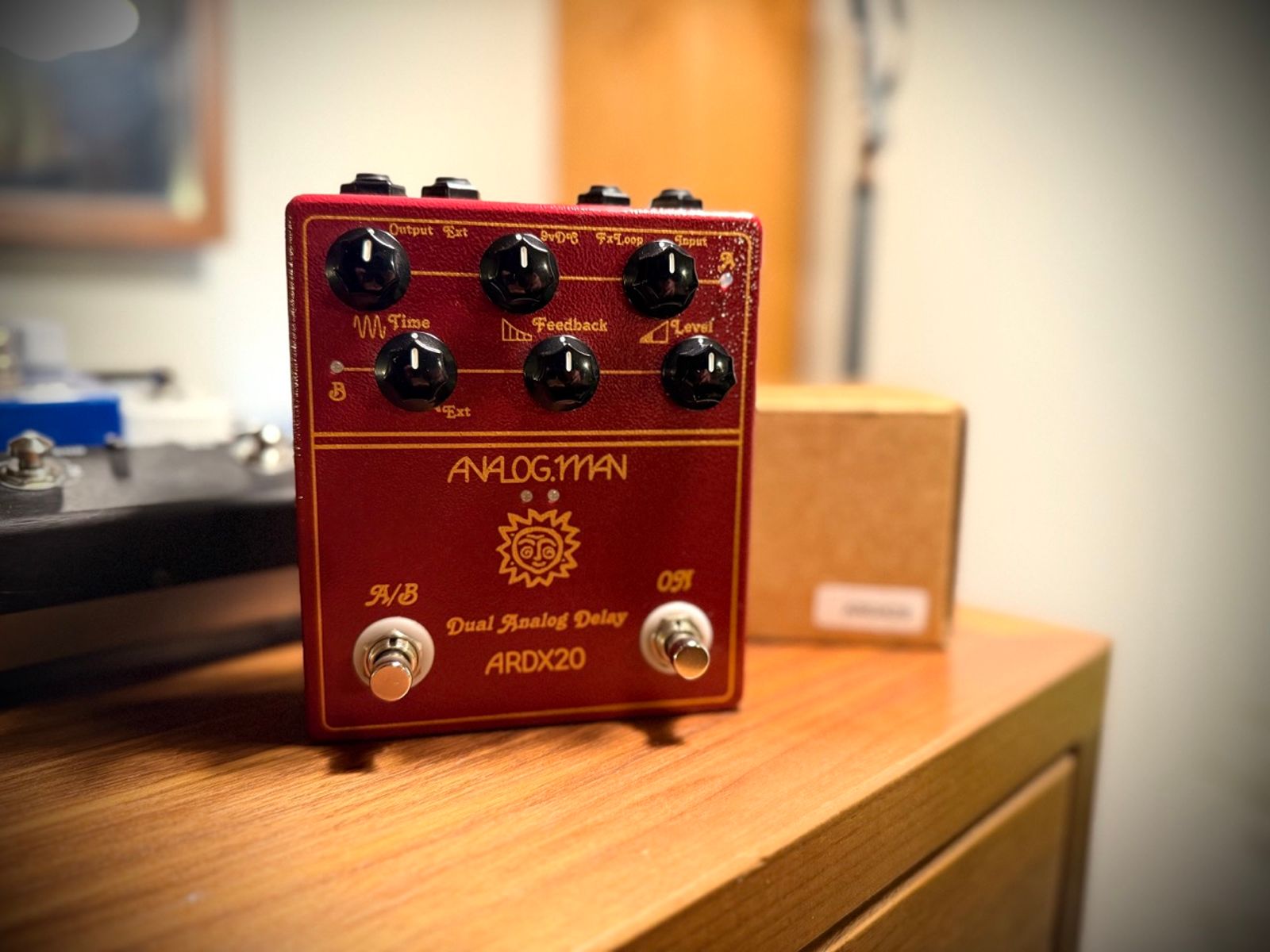
3. Analog Man ARDX20
The Analog Man ARDX20 approaches the practical implications of delay effects as if a working guitarist wrote up a wish list. Created by Ohbayashi-san of Analog Man Asia with input from Analog Mike, it expanded upon Analog Man's earlier AR20DL design and earned a Guitar Player Editors' Pick in 2010.
What sets the ARDX20 apart is its dual delay capability. Two independent sets of controls and two independent footswitches allow a player to dial in two completely different combinations of delay time, feedback and level. It's basically an analog preset. Need slapback for one tune and something way more ethereal for another? With the ARDX20, you've got both ready to go.
There is also an effects loop for processing only the repeats, expression control and optional external control via Analog Man's AMAZE unit. Yet the ARDX20 itself remains a genuine analog BBD design.
Those features would mean little if it didn't produce excellent warm delay repeats, and the ARDX20 has built a formidable reputation precisely because it balances fidelity with analog softness. Gary Clark Jr. has used one with expression control; Analog Man also documents use by moe.'s Chuck Garvey, while Jason Isbell's extensive 2025 rig included an ARDX20.
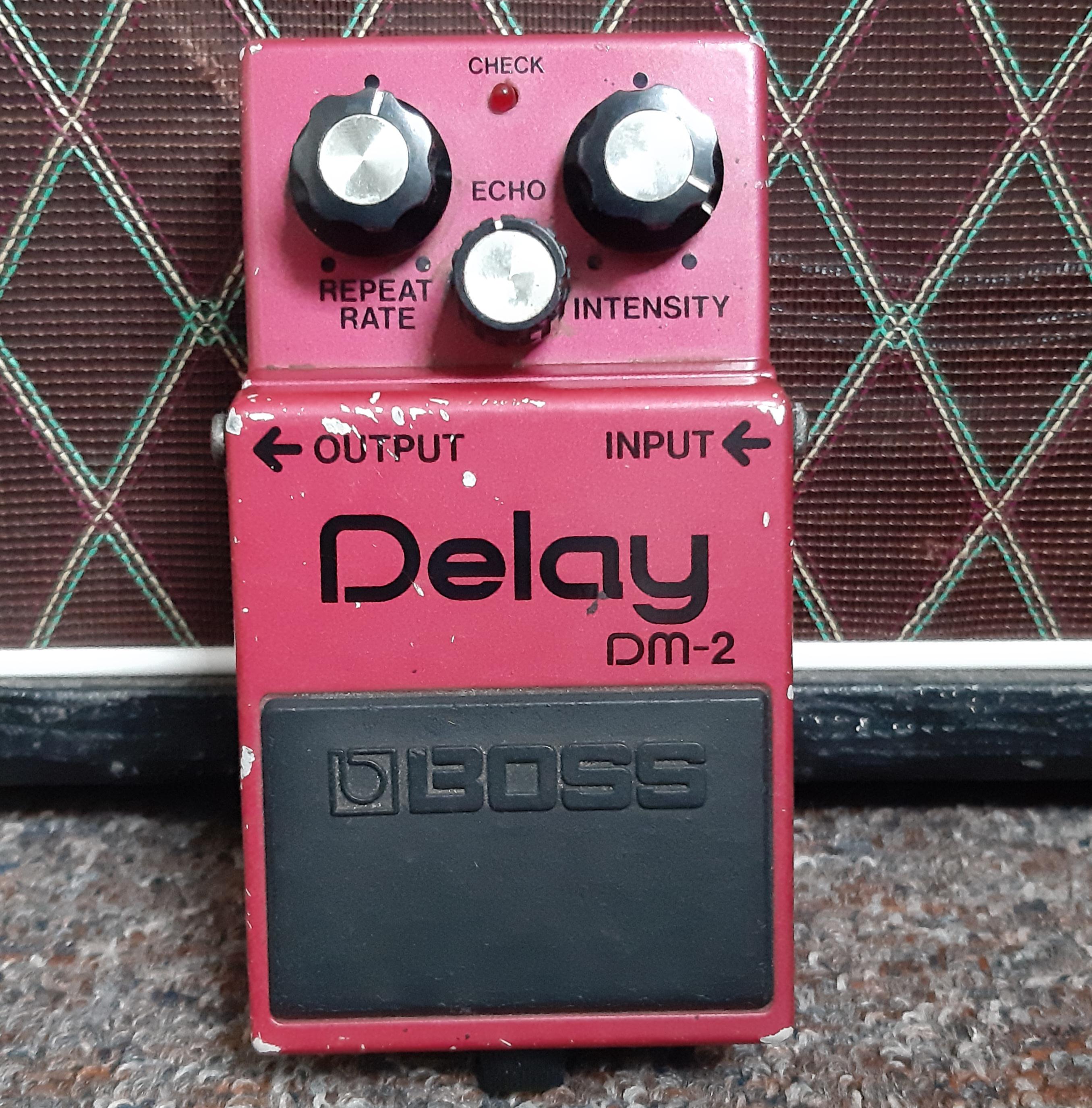
2. BOSS DM-2
BOSS introduced the DM-2 in 1981 as its first delay in the company's now-famous compact pedal format. Unlike the earlier DM-1, the DM-2 employed a BBD circuit and squeezed up to approximately 300ms from the technology.
That limitation became its signature. To reach its maximum delay time, BOSS restricted the frequency response of the delayed signal. The resulting repeats were darker and rounder than the original note—the exact behavior players now seek when they say they want warm delay repeats.
Production ended in the 1980s, but demand never really did. BOSS eventually revived the concept with the DM-2W Waza Craft in 2014, adding an extended mode while retaining the character that made the original analog delay pedal a benchmark.
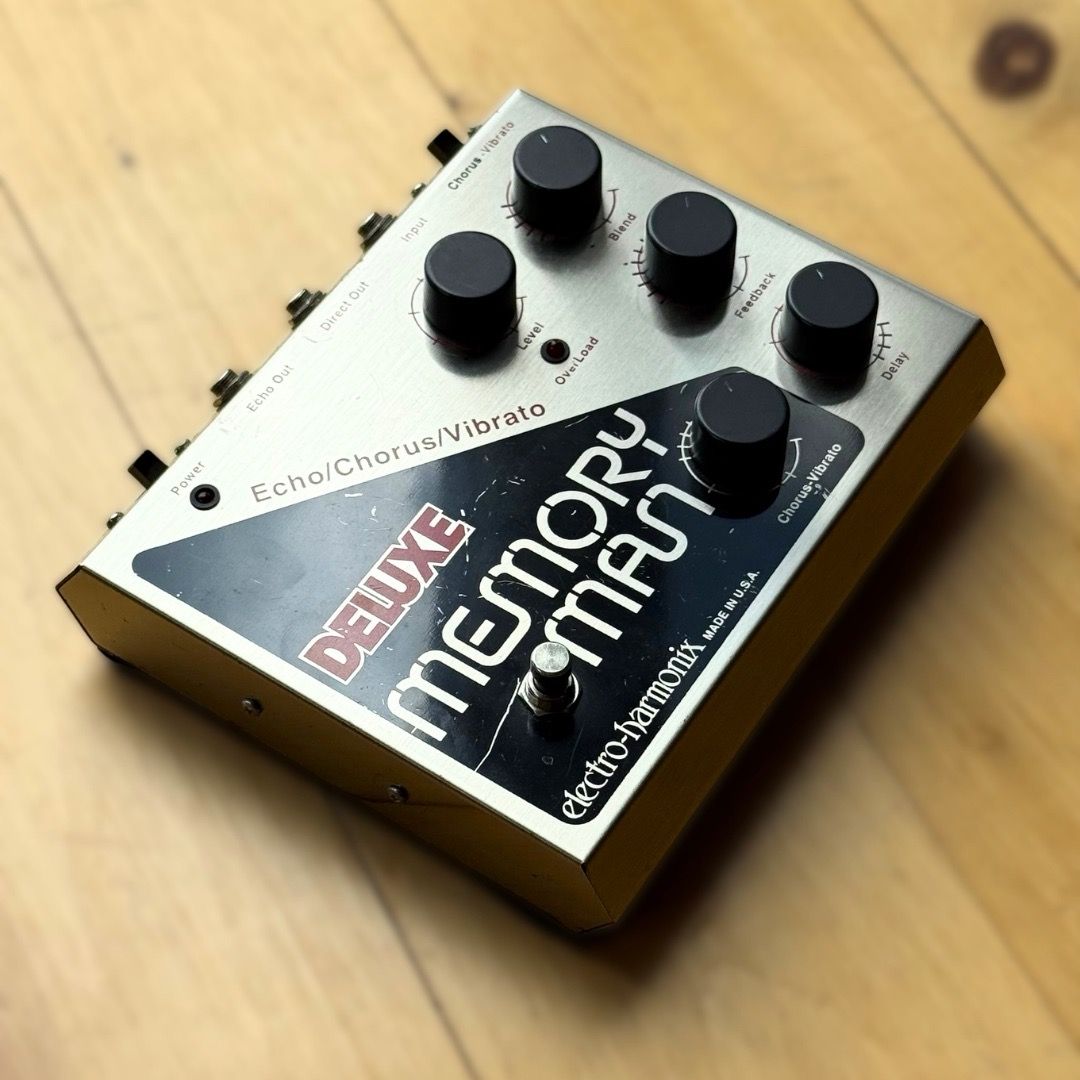
1. Electro-Harmonix Deluxe Memory Man
If one pedal defines analog delay as something more than simply repeating a note, it is the Electro-Harmonix Deluxe Memory Man.
The Memory Man line began in 1976, and the Deluxe version that crystallized the concept arrived around the turn of the 1980s. Alongside Blend, Feedback and Delay controls, it incorporated input-level control and dedicated chorus/vibrato modulation. That combination made the repeats feel alive: the bucket brigade device supplied degradation and warmth while modulation introduced movement and shimmer.
This is where self-oscillation, modulation, preamp coloration and delay time stop feeling like technical parameters and start becoming part of the performance. Modern versions can provide around 550ms of echo while retaining the basic analog delay/chorus/vibrato architecture.
Most importantly, musicians made that architecture famous. The Edge is the Deluxe Memory Man's defining ambassador, using Memory Man delays extensively in early U2 and famously on “Sunday Bloody Sunday.” Robert Smith and Radiohead's Ed O'Brien are among its other celebrated users.
Plenty of pedals produce warm delay repeats. Plenty of guitar effects pedals can create modulation. But the Deluxe Memory Man fused those ideas into something whose imperfections became musical vocabulary. For that reason, it remains the definitive analog delay pedal, and number one on this list.
Other Posts you may like


Guitar Strings Order: How the Guitar is Tuned and Why

Two Handed Tapping: Our Top 8 Tappers of All Time
Which Guitar Strings Wear Your Fret Wire Down More?
What is Nashville Tuning? Its History, Best Guitar Strings & Uses
Guitar Scale Length Explained: String Tension & Playability
What Guitar Strings I Used To Play...
0 Responses
Leave a Reply
Your email address will not be published. Required fields are marked *


